

Quick answer
Humpback whales are present in Tahitian waters from roughly July through November, with August to October the most reliable stretch. Access costs 0 XPF — this is open ocean, not a gated park — and boats operate daily, 07:30–17:30. Nothing is guaranteed: these are wild, migrating animals, and swell, wind and cloud cover shape any given morning far more than the calendar does.
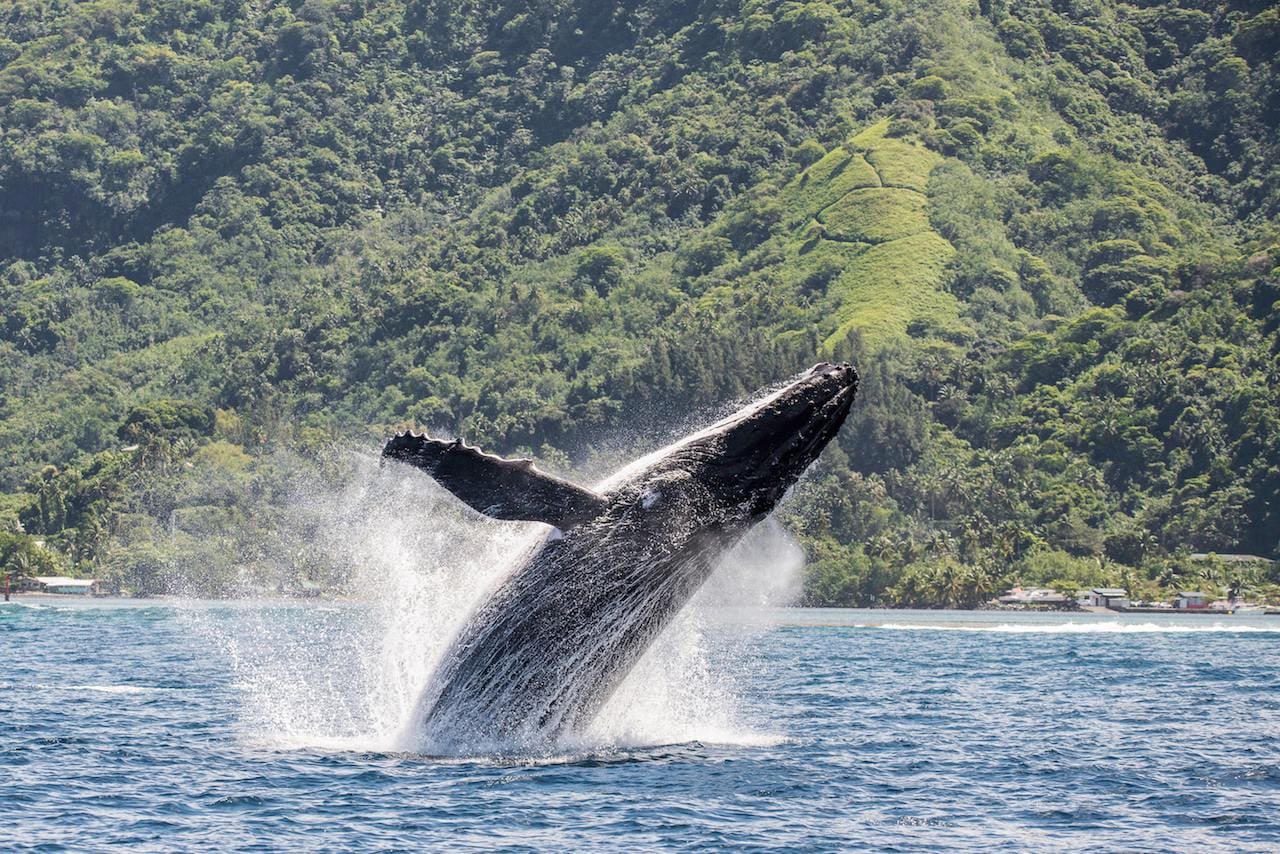
A humpback mother crossing to French Polynesia may cover more than 6,000 kilometres without eating. She fasts through the entire journey and through the months she spends nursing off islands like Tahiti and Moorea, living on blubber built up in the Southern Ocean. That biological fact explains everything about the tahiti whale watching season: the whales are here for the water temperature and the shelter of the reef, not for food, and they leave the moment the calves are strong enough to travel south. French Polynesia declared its entire exclusive economic zone a marine mammal sanctuary in 2002, one of the largest protected areas of its kind. That status shapes what a visitor encounters. Approach distances are regulated, licensed operators work under a code of conduct, and the number of boats permitted near a single animal is capped. Visitors will hear the local term for these animals — baleines à bosse — used by guides and skippers throughout the migration months. Departures leave from marinas along the west and north coasts, and most crossings stay within sight of the island's volcanic ridgeline. What a whale watching tour in Tahiti actually delivers varies week to week. Early in the migration, animals arriving from the south tend to be transient and fast-moving, often glimpsed at distance through a blow or a breach. By the middle stretch, mothers and calves settle into shallower bays and rest for long periods, which is when observation becomes calmer and closer. Late in the run, competitive groups of males — heat runs — produce the most dramatic surface activity, and singers can be heard through a hydrophone from surprising distances. Peak-period departures fill early, so booking well ahead is standard practice among visitors planning around the tahiti whale watching season. The practical takeaway is to treat the calendar as a probability, not a promise. Build several attempts into a stay rather than pinning hopes on one outing, and keep dates flexible enough to absorb a cancelled morning. Sea state governs more than any brochure admits, and a wild encounter earned across two or three tries tends to be the one visitors describe afterwards.
“The whales are here for the water temperature and the shelter of the reef, not for food — and they leave the moment the calves are strong enough to travel south.”
Understanding the Tahiti Whale Watching Season
The humpback whale migration to French Polynesia occurs annually from August through October, providing a consistent window for observation. Planning your visit during the early morning hours offers the most stable sea conditions and optimal light for spotting whales in their natural habitat.
August
Moderate24°C to 28°C; calm seas in morning
September
High24°C to 28°C; peak activity during this month
October
Moderate25°C to 29°C; warmer water temperatures; season end
Morning hours
Low—; calm seas and improved visibility
Verdict: The best opportunity to observe whales is during the peak months of September or October, specifically during the morning arrival window.
Daily Operational Hours During Tahiti Whale Watching Season
Whale watching excursions in Tahiti operate on a standardized daily schedule throughout the season. All tours are conducted within these established operational hours.
| Monday | 07:30–17:30 | |
|---|---|---|
| Tuesday | 07:30–17:30 | |
| Wednesday | 07:30–17:30 | |
| Thursday | 07:30–17:30 | |
| Friday | 07:30–17:30 | |
| Saturday | 07:30–17:30 | |
| Sunday | 07:30–17:30 |
Preparation Checklist for Tahiti Whale Watching Season
Humpback season fills licensed operator spots quickly, so most of the work happens well before you reach the water.
-
Book a licensed whale-watching operator early — French Polynesia limits permitted operators, and season slots fill weeks ahead.
-
Confirm your tour date directly with operator — Sightings are wild encounters, so departures shift with sea conditions.
-
Carry photo ID and booking confirmation — Operators check names against permitted passenger lists before boarding.
-
Pack a rash guard and reef-safe sunscreen — Open-water sun is intense and standard sunscreen harms surrounding reef.
-
Bring your own mask, snorkel and fins — Rental stock runs short in season and a personal fit seals better.
-
Take motion sickness medication beforehand — Offshore swells build quickly and remedies need time to work.
-
Stow gear in a dry bag — Spray and boat wash soak anything left uncovered.
-
Check tahititourisme.com for current in-water rules — Regulations on approaching humpbacks are updated between seasons.
Conduct Rules During Tahiti Whale Watching Season
French Polynesia is a designated marine mammal sanctuary, and humpback encounters are governed by law rather than operator preference. Breaking distance or approach rules risks fines for the boat and disturbance to mothers and calves.
Do
- Follow the guide's entry signal before sliding into the water
- Keep the regulated distance from every whale, especially mother-calf pairs
- Swim in small groups on the same side as the guide
- Enter the water quietly, feet first, without splashing
- Wear reef-safe sunscreen and dark or muted swimwear
- Report any whale that changes behaviour to the guide immediately
Don't
- Do not swim toward, chase, or block a whale's path
- Do not use flash, drones, or selfie sticks near animals
- Do not touch a whale even if it approaches you
- Do not dive down or free-dive beneath surfacing animals
- Do not shout, bang the hull, or make attracting noises
- Do not board a boat that promises guaranteed close contact
Check availability
Frequently Asked Questions About Tahiti Whale Watching Season
Everything you need to know about tahiti whale watching season