

Quick answer
There is no entrance fee — access costs 0 XPF, because whale watching is an excursion-based activity run by licensed operators rather than a ticketed site. Moorea is the more established base, with calmer leeward bays and shorter transit times; Tahiti offers deeper drop-offs and fewer boats. Operators run 07:00–18:00 daily, and morning departures typically meet calmer seas.
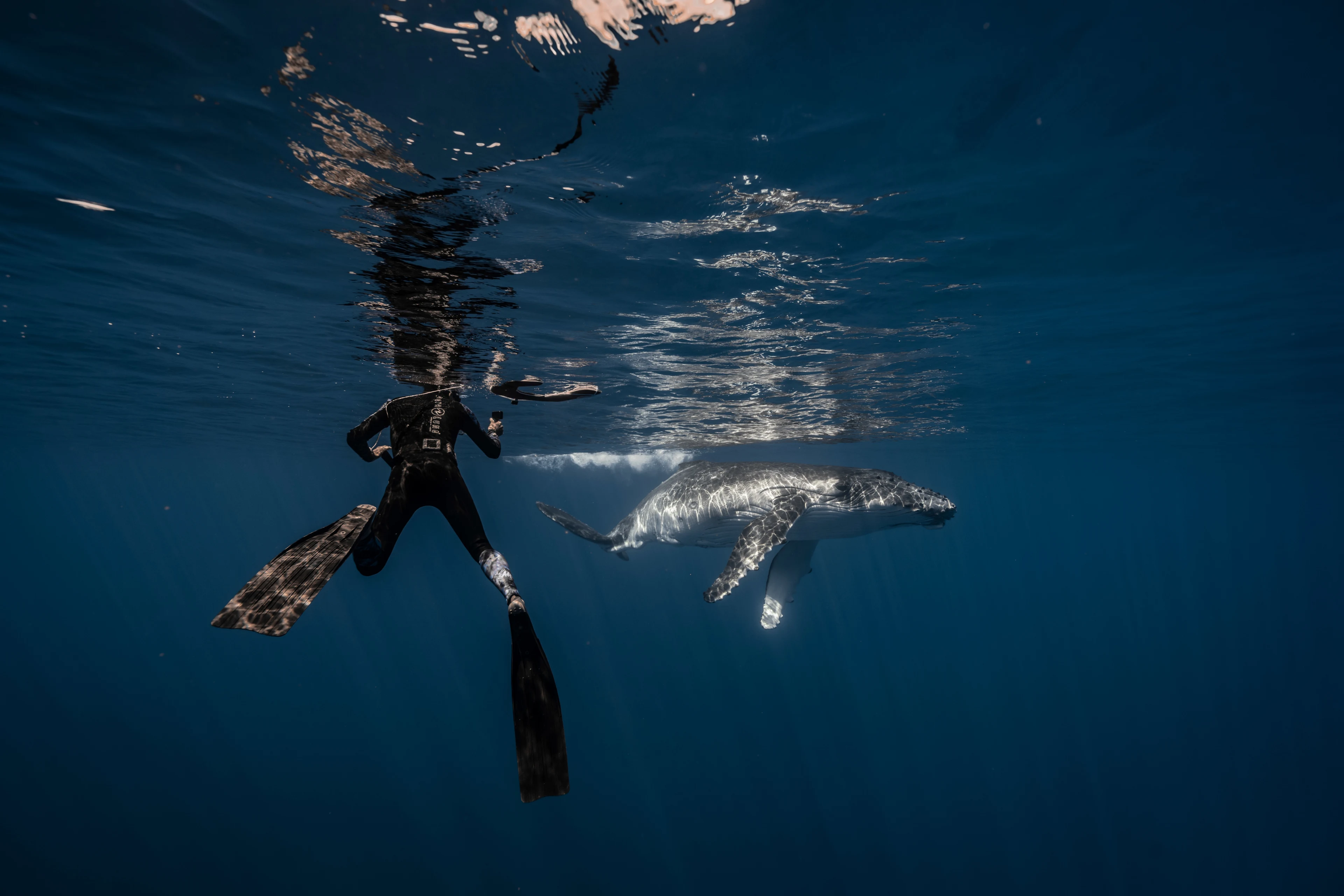
Humpbacks in French Polynesia are not casual visitors. The population that reaches the Society Islands is one of the smallest and most closely monitored in the South Pacific, and the whole archipelago has been a declared marine mammal sanctuary since 2002, covering roughly five million square kilometres of ocean. That legal status is the single most important fact behind any choice between whale watching Tahiti or Moorea: the rules, the licensing regime and the protected status are identical on both islands. What changes is the water, the boats and the logistics. Moorea sits about 17 kilometres across the Sea of the Moon and is reached by ferry from Pape'ete in roughly 30 to 45 minutes. Its northern coast — Ōpūnohu Bay, Cook's Bay, the reef shelf off Haapiti — drops away quickly outside the barrier reef, which is why mothers and calves rest there in the lee of the trade winds. The island has the denser concentration of licensed operators and naturalist guides, and most excursions leave from small marinas rather than a commercial port. Tahiti's advantage is different. The west coast around Punaauia and the Tahiti Iti peninsula gets far less traffic, and boats there often work longer transects with fewer vessels in the vicinity of a single pod. The practical answer for most travellers is that the two islands are complements, not rivals. A Society Islands whale watching tour from either base is subject to the same approach distances, the same limits on vessel numbers, and the same guide certification requirements — so the deciding factors become sea state, ferry timing and how much of the day the traveller wants to spend in transit. Anyone already staying on Moorea has no reason to cross; anyone based in Pape'ete can do either, but should count the ferry into the morning. Use this whale watching tahiti or moorea comparison as a filter rather than a verdict. Check the operator's licence before booking, confirm the departure marina, and treat sightings as probable rather than promised — these are wild animals in open water, and observation d'baleines in the Society Islands is governed by the whales' behaviour, not the schedule.
“The rules are identical on both islands; what changes is the water, the boats and the logistics.”
Operating Hours for Whale Watching Tahiti or Moorea Excursions
Whale watching excursions in Tahiti and Moorea operate daily to accommodate visitor schedules. Operators maintain consistent availability throughout the week.
| Monday | 07:00–18:00 | |
|---|---|---|
| Tuesday | 07:00–18:00 | |
| Wednesday | 07:00–18:00 | |
| Thursday | 07:00–18:00 | |
| Friday | 07:00–18:00 | |
| Saturday | 07:00–18:00 | |
| Sunday | 07:00–18:00 |
Regulations and Etiquette: Whale Watching Tahiti or Moorea
Humpback whales in French Polynesian waters are protected under a marine mammal sanctuary, and observation is regulated through licensed operators. Conduct in the water and on deck directly affects whether a mother and calf stay calm or leave the area.
Do
- Follow your licensed guide's entry and exit signals without exception
- Keep the regulated distance from whales at all times
- Enter the water quietly in small groups, one at a time
- Stay parallel to the whale, never in its path
- Move slowly and keep your body horizontal at the surface
- Book only with operators holding a valid observation licence
Don't
- Never swim toward or between a mother and her calf
- Do not touch, chase, or attempt to ride any whale
- Avoid flash photography, drones, or underwater scooters near whales
- Don't shout, splash, or slap the surface to attract attention
- Never block a whale's route or surround it with swimmers
- Don't ignore a guide's recall signal, even for a photo
Preparation Checklist for Whale Watching Tahiti or Moorea
Whale watching here runs as a licensed boat excursion, so most of the preparation happens before you reach the dock.
-
Reserve with a licensed operator early — Permitted boats are limited and fill quickly during the season.
-
Carry photo ID and booking confirmation — Operators check both at check-in before boarding.
-
Pack reef-safe mineral sunscreen — Open water reflects sun for hours and chemical filters harm reef systems.
-
Take motion sickness medication beforehand — Most remedies need 30 to 60 minutes to work offshore.
-
Bring a waterproof camera housing — Spray and swim entries will reach unprotected gear.
-
Wear swimwear under quick-dry clothing — Changing space on small boats is limited.
-
Pack water, a hat and a light windbreaker — Boats offer little shade and get cool at speed.
-
Confirm departure point the evening before — Marinas differ by operator between Tahiti and Moorea.
Check availability
Common questions about whale watching Tahiti or Moorea
Everything you need to know about whale watching tahiti or moorea